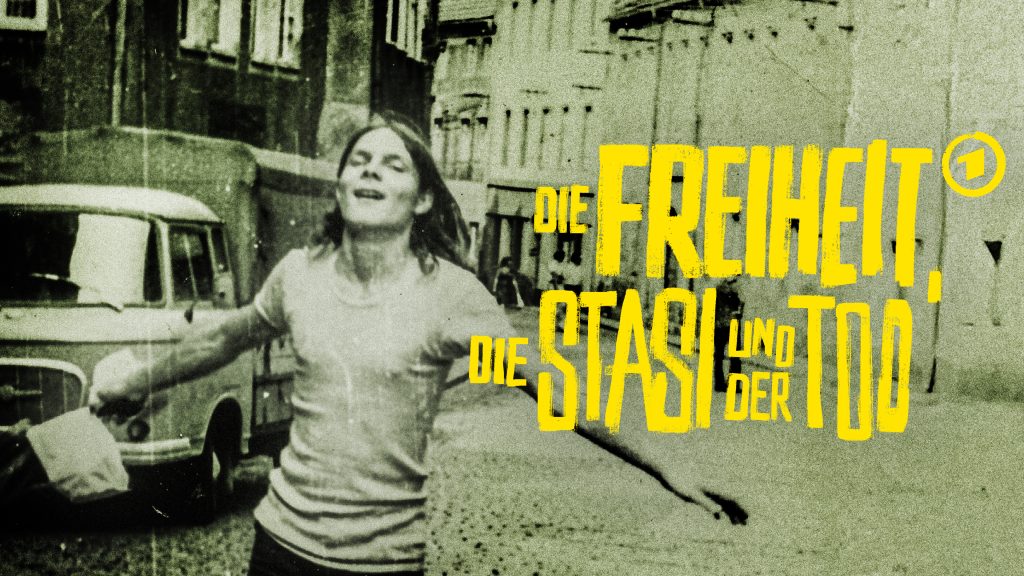
Am Freitag, dem 10. April 1981, steigen der dreiundzwanzigjährige Matthias Domaschk und sein Freund Peter Rösch gut gelaunt in einen Zug nach Ostberlin. Während in der Hauptstadt der DDR an diesem Wochenende der X. Parteitag der SED aufwändig zelebriert wird, wollen die beiden jungen Männer aus Jena zu einer Geburtstagsparty von Freunden. Die beiden werden Berlin nie erreichen. Zwei Tage später ist Matthias tot – gestorben in einem Untersuchungsgefängnis der Staatssicherheit. Er soll sich an seinem eigenen Hemd erhängt haben. Matthias’ Familie und Freunde zweifeln bis heute am angeblichen Selbstmord des jungen Vaters. Zu vieles scheint merkwürdig. Die Staatssicherheit versucht nach Matthias’ Tod mit allen Mitteln die Tragödie zu verschleiern und sogar seine Beerdigung geheim zu halten. Was ist am 12. April 1981 wirklich im Untersuchungsgefängnis passiert?
Julia Deane, Matthias Domaschks Tochter, geboren 1976: „Ich will verstehen, was passiert ist. Und ich will auch verstehen, was war das für eine Gesellschaft, die das so hat geschehen lassen oder die dazu beigetragen hat.“
Stefanie Domaschk, Matthias Domaschk’s sister: “That kind of conformity you had to go along with in the GDR just to hold certain positions – my brother said, ‘I’m not going along with that; I won’t bend myself out of shape like that. I don’t want that double standard – I won’t have it.’”
Both gripping and complex, this documentary by Sabine Michel and Sonia Otto tells the story of young people in the GDR who have a different vision of life to their parents. They want to travel, listen to international rock music and live their lives on their own terms. They dream of a ‘liberal’ form of socialism. Because they are different, they come under the scrutiny of the Stasi, which takes pre-emptive action against them.
Bernd Roth, back then a full-time employee of the MfS: “These people were seen as decadent, and as potentially inclined to organise an opposition movement in the GDR. If you were in favour of that, you were on the right side. If you were against it, you were on the wrong side.”
Driven to take a political stand by the violence of a paranoid state, Matthias Dommaschk and his friends stood up for their rights. In 1976, they signed the artists’ appeal against the expatriation of the singer-songwriter Wolf Biermann. Together with his girlfriend at the time, Renate, Matthias forged links with opposition movements in Czechoslovakia and Poland.
Renate Ellmenreich, mother of their daughter Julia: “Matthias was immediately in favour of signing the petition against Biermann’s expatriation, and he went on to say that if our child ever asks, ‘What did you do?’, then we’ll be able to look him in the eye and say, ‘We fought back as best we could. We didn’t just stand by and do nothing.’”
The state’s response is ruthless. From that point on, the young people become part of the so-called political underground. They are now enemies of the state and must be fought and broken. Like many others, Matthias is also imprisoned and barred from further education. Others are stripped of their citizenship against their will. Those who remain are under round-the-clock surveillance and are repeatedly arrested and interrogated. On 10 April 1981, the weekend of the 10th Party Congress of the GDR, it is Matthias and Peter’s turn. Two days later, Matthias is dead.
The unexplained and violent death of Matthias Domaschk becomes a symbol of the growing resistance against the dictatorship in the GDR. The authoritarian way in which the state authorities handle this case shocks, outrages and politicises the critical sections of civil society. In the months and years that followed, the protests intensified; they became more radical and less fearful. They were a key part of the forces that led to the Peaceful Revolution in 1989. Following the fall of the Berlin Wall, the decades-long search for the truth – which continues to this day – has also become a parable of the difficult process of coming to terms with a dictatorship within a society.
Roland Jahn, Freund von Matthias und Mitbegründer der Friedensgemeinschaft Jena, späterer Bundesbeauftragter für die Unterlagen des Staatssicherheitsdienstes der ehemaligen DDR: “Matthias went into prison young and healthy, and came out dead. That is the responsibility of this state, the State Security Service, the SED and everyone who went along with it and propped up this state. Everyone played a small part in his death. But nobody wants to admit they were responsible.”
Die Freiheit, die Stasi und der Tod – Das kurze Leben des Matthias Domaschk ist ein Cold Case von aktueller Bedeutung. Die Schlüsselerlebnisse werden erstmalig multiperspektivisch von seinen wichtigsten Angehörigen und Freunden, durch private Dokumente und durch Einblicke in den Apparat der Staatssicherheit erzählt.
Extensive film and photographic archive material, along with animated scenes, take us on a journey through time into life in the GDR during the 1970s and 1980s. We get to know Matthias as someone with whom we can identify. His dreams and critical attitudes from that time are easy for young people today to relate to. The question of the individual’s responsibility within society is one that confronts us all today more than ever before.